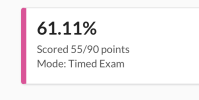
Jaysen does the SQE

Hey - given the complete lack of time I have opted to use the Law Answered modules to study content. I am looking for a reasonably priced question bank module. Any suggestions? Anyone here using the Law Answered modules?

 
Hey - given the complete lack of time I have opted to use the Law Answered modules to study content. I am looking for a reasonably priced question bank module. Any suggestions? Anyone here using the Law Answered modules?

See my other input re Jaysen's journey. I heard that The One Hundred (he's put a link in his chat) are good questions to practise on, and I can also recommend the Revise SQE books. There are other recommendations in that thread too. Good luck!
 
15 May

I want to share what is helping me the most right now:
  1. I find it's helpful to think: my goal is to commit the rules in each textbook to memory, which comes down to (1) writing flashcards for each chapter and (2) memorising those rules.
  2. I used AI to write a study plan that tracks which chapters I need to do each day. I keep updating this so it's as accurate as possible, but it gives me comfort to know I'll finish everything if I stick to my plan.
  3. Each day, I write flashcards for 3 chapters on Anki and I do a daily Anki session. I now break this into two blocks: one to write the chapters (about 2.5 hours if I'm being efficient) and one to do the Anki deck (1 hour). On the weekends, I also do practise questions. What I want to move towards is doing the flashcards during any spare moment I have so I get enough repetition.
  4. I find that it's easy to catch myself mindlessly writing flashcards or cheating on my recall. To study well, I know my studying blocks should be active and with effort, which means I'm being intentional about the flashcards I make and understanding them as I write them. If I don't, it's usually a sign I need to reset or restart the next day.
  5. Iteration also applies to my study plan. Originally, I thought it would be better to write flashcards for different subjects at the same time. But now I'm testing one topic at a time, while practising questions for different subjects. This is because I find I'm more likely to lose context when I switch subjects. I'm also more likely to do an extra chapter if I'm closer to finishing.
  6. Stuff in the textbook doesn't always make sense. If I don't get it, I put it into ChatGPT and ask questions until I do. The same applies if I don't understand my flashcards. I find understanding is the fastest way for me to remember it.
  7. On the reverse side of a card, I often add screenshots of cases/images from the textbook, or ChatGPT infographics. I find this helps especially with difficult rules.
  8. I realise how important it is to write good flashcards! This means flashcards that test something I actualy need to know but also follow the minimum information principles.
 
Sharing this from the WhatsApp group:


If you like podcasts, I really like it for consolidating my knowledge and understanding how it all fits in together.
 
  • Like
Reactions: Abbie Whitlock
This is also where you need to make sure that you are looking after your body. Sleep, gym, nutrition - it's easy to let all of these slip when you are watching the data. But if your body isn't marathon-ready, you won't be able to get through the exam days. No one needs to get sick the week before the exams. Hang on in there, you are on the journey!
 
Something I'm finding very helpful:

If I'm unsure about something, I'll ask questions to ChatGPT. My project has uploads of the textbook PDFs to answer my questions.

When I ask questions, I first write about my understanding of the topic as my prompt. I then ask the question. This means I'm actively recalling my understanding, and I'm much more likely to remember any corrections.

For example, instead of writing a prompt like: 'Is the test in negligence only objective?'

I write: 'From what I understand, the test for determining a breach of duty in negligence is objective. That means it's not based on whether a defendant personally felt they were acting reasonably. Instead, the court will assess: Did a defendant fall below the standards of a 'reasonable person'? But is there ever a subjective element to this test?'

I'm doing this routinely now and it's going a long way to solidify what I know.
 
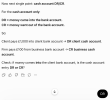
Starting solicitor's accounts today and just sharing what I found helpful re: DR/CR and the accounts:

I've copied the summary from the textbook into ChatGPT. My prompt is to ask it to teach it to me until I get it. But to only teach me one point at a time.

1783255701623.png
 
The best tip I heard for accounting is to only focus on the ledger, because thats the part that makes sense: money in = credit; money out = debit. The cash sheet is then just Bizzaro World: everything is opposite.
 
  • Like
Reactions: Jaysen
You are seeing one of the inherent issues with the whole way that the assessment is structured. It's very hard to feel consistently as if you are making progress. That in itself is part of the mind games the SQE plays with candidates. And believe me when I tell you, you will have NO IDEA how you did on the real thing. If you had told me I'd come top in the country or bottom, I'd have believed you. (As it turned out I was somewhere nearer the top than the bottom but you get my point!)

The thing to hang onto as you get nearer, is starting each moment with fresh brainpower.

After FLK1 you will be dreaming about the questions you got wrong - or at least poring over them. They will haunt you. Give yourself a day off to process and then fight those demons - welcome them in and show them the way out.

Halfway through the morning of my FLK2, I literally had to stop, take a couple of minutes and recentre. I was on the verge of walking out - the questions felt SO unfamiliar and the whole experience was SO destablising. But I figured I'd spent too much money to walk out, and also that active choice to keep going was a powerful one. I closed my eyes, made peace with the unpleasantness and figured it was better to stay in and fail than to abandon ship. I didn't fail but it felt as if I would.

I think it's important to be clear that this is a mind game as much as anything else. It's easy to be flippant but the stamina required is part of the package. I'm actually excited to see you undulating, @Jaysen - it's a unfamiliar situation for anyone who is used to succeeding academically. And learning to be comfortable with being uncomfortable is a big part of the battle. Not convinced it makes for more competent lawyers but that's another issue!

Thanks for telling us all and for remembering to be humble at times. Keep going!!
 
Last edited:
You are seeing one of the inherent issues with the whole way that the assessment is structured. It's very hard to feel consistently as if you are making progress. That in itself is part of the mind games the SQE plays with candidates. And believe me when I tell you, you will have NO IDEA how you did on the real thing. If you had told me I'd come top in the country or bottom, I'd have believed you. (As it turned out I was somewhere nearer the top than the bottom but you get my point!)

The thing to hang onto as you get nearer, is starting each moment with fresh brainpower.

After FLK1 you will be dreaming about the questions you got wrong - or at least poring over them. They will haunt you. Give yourself a day off to process and then fight those demons - welcome them in and show them the way out.

Halfway through the morning of my FLK2, I literally had to stop, take a couple of minutes and recentre. I was on the verge of walking out - the questions felt SO unfamiliar and the whole experience was SO destablising. But I figured I'd spent too much money to walk out, and also that active choice to keep going was a powerful one. I closed my eyes, made peace with the unpleasantness and figured it was better to stay in and fail than to abandon ship. I didn't fail but it felt as if I would.

I think it's important to be clear that this is a mind game as much as anything else. It's easy to be flippant but the stamina required is part of the package. I'm actually excited to see you undualating, @Jaysen - it's a unfamiliar situation for anyone who is used to succeeding academically. And learning to be comfortable with being. uncomfortable is a big part of the battle. Not convinced it makes for more competent lawyers but that's another issue!

Thanks for telling us all and for remembering to be humble at times. Keep going!!
This is very reassuring Alison. Thank you so much for sharing!
 
  • 🤝
Reactions: Alison C
My first SQE exam is tomorrow, so I made a list of my most common errors. I'll update as I think of more things:

Ethics
  1. I now often default to choosing the safest option rather than the practical option. Example: if you're a NQ solicitor given a task by a partner, and you worry you're not competent, the SQE answer is to decline the task, even if you wouldn't do that in practice!
Business
  1. GM Dates:
    1. 14 clear days: normal notice to shareholders to call GM
    2. 21 and 28 days: if a 5% shareholder requisitions a GM; directors must call meeting in 21 days and hold it no later than 28 days after (max 7 weeks)
    3. - 28 days special notice: shareholders give directors 28 days notice to hold GM if they want to remove a director; OR and not WR
  2. Voting thresholds in GM
    1. Over 50% to pass OR and 50% to block
    2. 75% or over to pass SR and over 25% to block
  3. A preference transaction needs a desire to prefer
  4. Insolvency dates
    1. Preference: 6 months; 2 years if connected
    2. Floating charge: 12 months; 2 years if connected
    3. Extortionate credit: 3 years
    4. Undervalue: 2 years; insolvency presumed if connected
  5. HMRC is a preferential creditor for PAYE/VAT/employee NI but not corporation tax
  6. Forms:
    1. AP01/AP02: New director
    2. AP03/AP04: New secretary
    3. IN01: To incorporate
    4. TM01: Resignation of director
    5. TM02: Resignation of secretary
    6. CS01: Update confirmation statement
Tort
  1. Psychiatric harm: Primary Victim: 'I'm in danger' v Secondary victim: 'I feared for/witnessed harm to someone else' (+ other reqs)
  2. Material contribution of multiple D's:
    1. Divisible: apportion liability
    2. Indivisible: each liable for whole, with contribution
    3. Mesothelomia/asbestos: think jointly and severally liable for material risk
  3. Police can be liable for positive acts (e.g. chasing suspect and pushes member of public)
  4. If type of damage is foreseeable, you can claim all losses
  5. Product liability negligence: Donoghue or CPA
  6. CPA: you can't claim for defective items; property < £275, and business property
  7. No CPA claim is item is facts say item is stolen
  8. No vicarious liability for actions of independent contractor
  9. Pure economic loss: no claim unless special relationship + reliance (usually negligent mistatement); consequential economic loss: claim for all reasonably foreseeable losses
  10. Occupier's liability: harm should come from the state of premises
Contract
  1. In a breach of contract: if profits naturally arise from a loss ('in reasonable contemplation of the parties'), it's recoverable; if it's unusual/exceptional it's only recoverable if the defendant knew the special circumstances before contracting
  2. Void v voidable
    1. Mistake: void
    2. Misrep: voidable (if a third party has acquired an item, mistake is ideal)
    3. Minors: voidable
    4. Incapacity: voidable (+ other party needs to know)
    5. Duress: voidable
  3. Is term incorporated?
    1. Signed
    2. Prior consistent couse of dealing
    3. Reasonable notice BEFORE contract formed
  4. 5 types of losses:
    1. Expectation loss/loss of bargain: Put C back if contract performed; cost of cure/difference in value
    2. Loss of amenity: No difference in value + cost of cure is disproportionate (e.g. minor size difference in building a swimming pool)
    3. Reliance loss: Wasted expenditure + expected profit too speculative
    4. Nominal damage: breach but unprovenloss
    5. Distress/disappointment: contract's purpose is pleasure
Legal Services
  1. Solicitors get automatic rights of audience when admitted to the roll of solicitors (they just can't exercise the rights in senior courts without the additional qualification)
  2. High Court = > over £100,000 or > £50,000 in personal injury
  3. Same case but appeal court: 'reversing'; different case: 'overturning'
  4. Opponent's costs are set off against the DBA fee
  5. Eiusdem: phrase narrowed by examples before it; Noscitur: vague word narrowed by its surrounding words
Dispute
  1. If D's case against C is unconnected to claim, you can still file it with the counterclaim
  2. You'll get sanctioned if you unreasonably refuse mediation via costs
  3. If D admits liability, don't count that amount (or interest/costs) when allocating the track
  4. Which country in tort? Where damage occurred
  5. Hearsay or not? To prove truth: hearsay; to prove what was said: not hearsay
  6. Service
    1. Claim form: second business day after step
    2. Particulars of claim: Before 4:30pm on business day: on that day; or next day
  7. 'And' v 'Or' requirements
    1. Summary judgement: No real prospect AND no compelling reason
    2. Set aside default judgement (in defence): real prospect OR some other good reason
    3. Permission to appeal: real prospect OR some other compelling reason
  8. Limitation claims
    1. Contract: 6 years from breach
    2. Tort:
      1. Tort/Negligence without PI: 6 years from damage
      2. Personal injury: 3 years of knowledge; 3 years of injury (whichever is later)
      3. Latent damage: 6 years from damage or 3 year from knowledge (whichever is later); 15 year long-stop

I hope it's useful for anyone who takes the SQE in the future!
 
Last edited: