• TCLA Premium: Now half price (£30/month). Applications, interviews, commercial awareness + 700+ examples.
    Join →

TCLA Vacation Scheme Applications Discussion Thread 2025-26

radssss

Legendary Member
Aug 16, 2024
674
994
Hello!

Congratulations on the AC invite!!

The main resource that I used when preparing for a case study interview was this guide by Jacob Miller - I would definitely take a look! There is also a guide to Private Equity that is useful for understanding how a PE transaction is structured -you can find that here.

I have also quoted some more general posts I have made in relation to approaching case study exercises, so hopefully they are helpful too.

Best of luck!! :)
Thank you very much Abbie, this is very helpful! :)

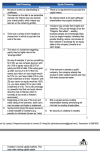
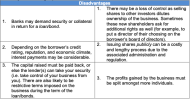
I just had another question in relation to debt finance and equity finance. In case studies, how to figure out which option is better or if a mix of both options is suitable. What are some advantages and disadvantages of each?
Please do let me know if there are any articles/videos tcla has got on this! Thank you :)

@Abbie Whitlock
 

TCLAuser2002

Legendary Member
Dec 23, 2025
136
259
Thank you very much Abbie, this is very helpful! :)

I just had another question in relation to debt finance and equity finance. In case studies, how to figure out which option is better or if a mix of both options is suitable. What are some advantages and disadvantages of each?
Please do let me know if there are any articles/videos tcla has got on this! Thank you :)

@Abbie Whitlock
1771800345676.png

1771800360652.png
hope this helps
 

yasmars

Legendary Member
Premium Member
Jan 1, 2021
523
865
Prepared hard for my CMS AC on Tuesday, but feeling the nerves
That’s completely normal. What’s helped me is turning the nerves into excitement. It’s quite nice being able to talk to real people at the firm, especially as the former stages of the application process these days are mainly testing/VIs.
 
  • ℹ️
Reactions: hxnnahrobinson

hxnnahrobinson

Distinguished Member
Dec 19, 2022
63
112
That’s completely normal. What’s helped me is turning the nerves into excitement. It’s quite nice being able to talk to real people at the firm, especially as the former stages of the application process these days are mainly testing/VIs.
Thank you! Yes, I would happily go in tomorrow and do the AC. Think it’s the wait now that I am finding uneasy. And I am glad as well that the firm doesn’t have a specific number of places, so I am not competing against others (which also helps the nerves). Trying to see it as an opportunity to show my knowledge of the firm, rather than a job assessment. Obviously I would absolutely love the job, but focusing on the outcome too much would stress me out. So I agree, it’s important to enjoy the process
 

hxnnahrobinson

Distinguished Member
Dec 19, 2022
63
112

I study Finance, and this is very useful. Here is some more advice too:
  • Link equity financing to:
    • Initial Public Offerings (IPOs) – when a firm first lists on the stock market to raise capital.
    • Seasoned Equity Offerings (SEOs) – when an already listed firm issues additional shares.
    • Both typically increase the number of shares outstanding, leading to share dilution (reduced ownership percentage and possibly lower EPS for existing shareholders).
  • Firms can also issue shares through:
    • Rights issues – existing shareholders are offered new shares, usually at a discount, to maintain their ownership proportion.
    • Bonus (scrip) issues – free additional shares given to shareholders; no new cash is raised, but total shares increase, so dilution still occurs in value terms
  • Be aware of financing restrictions often written into legal agreements:
    • Covenants may restrict additional borrowing or equity issuance.
    • Dividend restrictions can limit payouts to preserve cash for debt servicing.
    • Asset disposal restrictions prevent firms from selling key assets without lender approval.
    • These are designed to protect creditors and control risk-taking by management
  • Always evaluate financing choices using the risk–return trade-off:
    • More debt → lower cost (as creditors are repaid first when a company goes into liquidation) but higher financial risk (gearing/leverage) - this can limit the firm’s liquidity due to interest payments on debt
    • More equity → safer balance sheet but higher cost of capital and potential dilution.
 
Last edited:
I study a Finance degree, and this is extremely helpful.

It is important as well to link equity financing to Initial Public Offerings and Seasoned Equity Offerings, particularly if a firm deals with capital markets. These are the share issuance processes that typically lead to share dilution. Also relevant to discuss dividend payments, and how a firm may offer cash or shares as dividend to their investors. Shares dilute existing shareholders, but cash would not.

Shares can further be issued through rights issues and bonus issues

Important as well to consider restrictions, lawyers can add dividend restrictions, asset disposal restrictions and covenants to prevent additional borrowing/equity issuances

With debt, creditors need to be paid first if a company goes into liquidation, so they have priority over equity shareholders. It is a cheaper cost of financing and so is less risky than equity for this reason. Must consider risk versus return to determine finance cost
This is so so helpful, thank you for sharing! On the matter, does anyone have any thoughts on if there tends to be conflict between equity investors and vulture funds/special situation investors when investing in a distressed company? And if so, how the lawyers navigate these?
 
  • Like
Reactions: Abbie Whitlock

hxnnahrobinson

Distinguished Member
Dec 19, 2022
63
112
This is so so helpful, thank you for sharing! On the matter, does anyone have any thoughts on if there tends to be conflict between equity investors and vulture funds/special situation investors when investing in a distressed company? And if so, how the lawyers navigate these?
No worries, I have rewritten it slightly so it is clearer. And for a distressed company, they are already experiencing limited funds

Debt investors (creditors) must be repaid first if things go wrong. Equity investors only get their cash invested back after all debts are paid

Distressed funds shall usually buy the debt to take control, purchasing debt at a large discount and then using their creditor rights to covert that debt into ownership. This could occur through convertible or exchangeable bonds.

The fund becomes the majority new owner, and so the existing shareholders would be heavily diluted.

Equity investors with to keep their shares alive and maintain ownership. Increases in company value will elevate their share value and return on investment. Yet the specialist funds wish to dilute the company ownership structure to fix the balance sheet.

You could argue that the distressed funds are correct because the equity shareholding will gain their value once the debt is largely eliminated/fixed.
 
No worries, I have rewritten it slightly so it is clearer. And for a distressed company, they are already experiencing limited funds

Debt investors (creditors) must be repaid first if things go wrong. Equity investors only get their cash invested back after all debts are paid

Distressed funds shall usually buy the debt to take control, purchasing debt at a large discount and then using their creditor rights to covert that debt into ownership. This could occur through convertible or exchangeable bonds.

The fund becomes the majority new owner, and so the existing shareholders would be heavily diluted.

Equity investors with to keep their shares alive and maintain ownership. Increases in company value will elevate their share value and return on investment. Yet the specialist funds wish to dilute the company ownership structure to fix the balance sheet.

You could argue that the distressed funds are correct because the equity shareholding will gain their value once the debt is largely eliminated/fixed.
Makes sense. How would convertible bonds work in practice? I haven't come across them before!
 

hxnnahrobinson

Distinguished Member
Dec 19, 2022
63
112
Makes sense. How would convertible bonds work in practice? I haven't come across them before!
Convertible bonds are a type of loan that investors give to a company when it needs money. Unlike a normal loan, the investor has the option to turn that loan into shares in the company later on. This means that instead of only getting their money back, they can also benefit if the company recovers and becomes more valuable. Because of this, investors such as vulture funds have an incentive to help the company survive and improve, rather than pushing it into liquidation just to recover the debt.

This may be going into too much detail, but it could be a way to resolve the tension between the parties, so makes an interesting discussion point.
 

About Us

The Corporate Law Academy (TCLA) was founded in 2018 because we wanted to improve the legal journey. We wanted more transparency and better training. We wanted to form a community of aspiring lawyers who care about becoming the best version of themselves.

Get Our 2026 Vacation Scheme Guide

Nail your vacation scheme applications this year with our latest guide, with sample answers to law firm questions.