Previous Unfinished Study: To include or not?

Hello, looking for some input on something that's been on my mind every cycle.

Before completing my law degree, I studied finance in Canada. I did two years, was doing ok but my GPA was pretty sucky (2.06/4.0).

(Un)fortunately, depending on how you look at it, external factors forced me to relocate, and I chose to study law in the UK.

The question is, when it comes to applications, should I include the Canadian studies in the education section or not? It was a pretty prestigious university, and I reference my time there a lot in my app questions as I did quite a lot outside of academia, but not sure which pulls up more red flags, including it or not including it (since there's going to be a 2-year gap between A-Levels and my UK law studies if I leave it off).

My options are:
1) Include it, but not include courses, grades or gpa; essentially just a signpost that I attended said Canadian university once upon a time. Maybe include reasons for having to relocate in extenuating circumstances or the "additional information" sections if they're there

2) Include it, and enter my sucky grades

3) Not include it, and just mention it in relevant app questions if the opportunity arises.

Any input would be appreciated, thank you :)

Question about winter vac schemes

Hey everyone, was just wondering for those winter VC apps which recruit on a rolling basis that opened on 1st Oct and will close on 31 Oct/late Oct, should I realistically be going for winter or summer/spring? I would ideally like to have a TC locked up as soon as possible, but of course I appreciate that the timing would not favour me, given that the application window is exactly half gone. Would appreciate everyone's thoughts, thanks in advance!

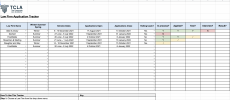
Law Firm Application Tracker by TCLA - Free Resource

Hey everyone,

I know this can be a really stressful time. You might be thinking - What firms should you apply to? When are the application deadlines? How do you track everything that is going on?

We spent a few days creating a simple law firm application tracker so you can stay organised. We want anyone to be able to track:

- The firms you're applying to
- Opening and closing application dates
- Whether firms recruit on a rolling basis
- Vacation scheme dates
- The stage of your application

We're giving it away on LinkedIn, simply head over to this post :).

1634044080007.png
  • Like
Reactions: AvniD

SQE preparation course vs law conversion course – SQE1 exam

Dear all,

As an international student, I studied Law for five years at the university in France where I obtained an undergraduate degree, a bachelor's degree, a master's degree, and a postgraduate degree (a five-year degree, based on a competitive selection process). Also, I did not become a French qualified lawyer on purpose. Although my academic background is in civil law and not in common law, I am obviously not new to the field of Law, intensive law degrees/courses, and a huge amount of written and oral exams within those five years studying Law.

My goal is to become a qualified solicitor in England and I will take the SQE in due course, starting with the SQE1 exam. In light of my academic background, I am wondering whether I would rather enrol in an SQE preparation course that would cover the areas of law that are taught as part of a bachelor's degree in law and, by extension, as part of a law conversion course, e.g. the PGDL, in order to also allow me to master the foundational legal knowledge in-depth, or enrol in a law conversion course as long as the latter is also designed to prepare for the SQE1 exam. Also, although completing a qualifying law degree or a conversion law course is no longer a regulatory requirement by the SRA, some firms still expect trainees to have completed a qualifying law degree or a law conversion course prior to embarking on the SQE.

I would like to add that I am completely aware of the fact that the decision is very unique to my personal circumstances. Also, I have already researched a lot about all of this, attended several webinars, and asked questions in light of my personal circumstances. However, even though my initiatives have been helpful, I have not been able to make an informed decision yet. I would then really appreciate your thoughts @Jaysen @Jessica Booker @Alice G . In any case, any tips, advice and/or suggestions would be much appreciated.

Thank you all very much for your time.
  • Like
Reactions: John Doe

Question for the Application Form

Hi All. I have a quick urgent question.

If I connected with a lawyer or a partner at the firm I am applying to via LinkedIn and established a rapport with them via the platform or in a virtual meeting. What is the best way to describe my relationship with them pls?

This is to answer a question on the application form which says: 'State the name of your contact(s) and your relationship'?

BCLP Open Day - vantage issues

Hi, I am currently applying for BCLP's open day however I am struggling with the Vantage system for inputting my module grades. The module name is not in the dropdown and there is no way to add manually. I can type the module name in but it disappears when I move onto the next one. I was wondering what you would suggest I do, I was unsure if I should contact grad rec directly and send them in an email?

Shaky LPC Interviewing & Advising performance

Hello all,

I recently did my interviewing and advising assessment at BPP, on the fast-track LPC. The introduction and client overview section was fine, but as soon as I got onto questioning and advising my nerves took over and I waffled.

I think I only really asked one key relevant question. The legal issue was in relation to a right of light and how to defend that against a proposed development nearby, so I asked to see the client's Official Copies which confirmed they had the easement. My other questions were just filler questions, like "has the developer contacted you?, do you know what the development is?".

I completely forgot to ask about the local character of the neighbourhood and if there might be potential grounds to challenge the development at the planning authority. My advice was go to court and get an injunction or negotiate with the developer but I set out the pros and cons of each.

I dealt with the conclusion (client care, letter of advice, fees etc.) fairly well as that was memorised before but it's only 4 marks out of the whole thing, the majority of marks are in questioning and advising.

I felt very bad after the assessment. I felt like I missed out a lot for the questioning and advising sections because of the pressure.

Does anyone have any experience doing this assessment at BPP? How leniently is it marked? How hard is it to fail? Will they penalise you for missing options and asking filler questions?

Thanks a lot.

DWF Open Day - 50 word work experience section

Hi, I am looking at DWF's open day application but am struggling with the 50 word limit in the work experience section. I was wondering what this the best way to approach this section when I only can say 2-3 sentences max?

Should I pick out key skills such as in the below example for paralegal work but limit description?

"I utilise problem solving and organisational skills to balance competing tasks across practice areas, ensuring progress towards final deadlines is noted. I regularly communicate with associates in London litigation team to return tasks relating to a long running matter. I use my initiative encountering hurdles which endanger the final deadline"

Can anyone help with my application?

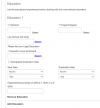
I studied my Class 10 and Class 12 in New Delhi, India and I was filling out the application for Freshfields' Non Law Workshop. I am confused about what should go into specific boxes, can anyone help?

Thanks in advance.

Attachments

  • Screenshot 2021-10-09 at 2.26.21 PM.png
    Screenshot 2021-10-09 at 2.26.21 PM.png
    69.8 KB · Views: 33
  • Screenshot 2021-10-09 at 2.26.43 PM.png
    Screenshot 2021-10-09 at 2.26.43 PM.png
    40.3 KB · Views: 33
  • Screenshot 2021-10-09 at 2.27.30 PM.png
    Screenshot 2021-10-09 at 2.27.30 PM.png
    55.5 KB · Views: 33

Who is Admin on TCLA? Began bronze membership last week but still not admitted

Hi there, I began my bronze membership last week (paid etc), but have still not had my membership approved. Obviously, I would like access to the tabs that I have paid for from the date that I paid, and I wish to access the Application Review tabs etc. Could someone please help me? It's very frustrating, as I feel like I've paid for a week's worth of the service without actually receiving it... I've messaged on the chat and emailled TCLA too, but no dice.

Please could someone help me asap.

The best SJT advice on the forum

Hey guys. I just compiled all the stuff that I found useful on SJTs on the forum. Mostly everyone is confused regarding how to approach these tests so, here it goes.

SJT ADVICE

Q1- Let's say if we are working on the same project and the other trainee needs help but I am busy as well, is offer help or find our supervisor to sort out for us the better answer?

Q2. Very often there are questions about multitasking. Should we take up the task in any event or inform the partner about the deadline you got? On the other hand, is there a preference over helping your trainees first or taking a new task from the partner?

Q3. Does our personal interest matter? Questions sometimes emphasize the task is not something you are interested in. I usually answer that I will still take it but I have no idea whether this is right or not.

Ans - 1

Hi, I've also been doing okay with SJTs so far so I might also give some thoughts. Just FYI I have no idea if these are the 'correct' responses but they are the ones I tend to pick.

1. I usually would go to the supervisor especially if you're also quite busy because you might risk compromising the quality of your own work. Your supervisor will have a better idea of everyone's workload so they might know some other trainees who have less work and are in a better position to help out.

2. For multitasking I usually try to show enthusiasm towards the task even if its not possible for me to take it on. If its something that I'm really interested in I'll go to my supervisor and see if I can get some deadlines moved around or if it's really not possible I'll tell the partner no but tell them if any opportunities arise in the future I'd be interested.

3. I usually will take into account personal interest but also be open-minded to different experiences because as a trainee you'll be trying to decide which area you'd like to qualify in and it'll be easier for you to know where your interests lie if you have tried a variety of things.

Ans - 2

Hi there,

I offer my views below but I must caveat this by saying that I cannot be certain of my answers or thoughts here as unlike the WG you do not get scores for SJTs as you will know but here goes:

1. This is a tricky one and quite dependent on what you are exactly being asked and what the options are. Of course, teamwork is important, but you cannot sacrifice your own work. I think if the scenario makes this sound plausible, you could agree to just do a small part of the work or even refer the matter up to a supervisor but my thought on the latter is also that supervisors are very busy people so it is often best to resolve things where you can. I suppose in practice you would really try your best to help but you might also refer them to another trainee you know of who might have more capacity or something like that. Essentially, the question of this is very scenario dependent but just remember: teamwork is vital but you also have to manage your time so as to not negatively impact the work you already promised.

2. With multi-tasking, it is all about appraising your own workload, figuring out what you have to do, when the deadlines are and what time it will take. The key here is open and quick communication - partners won't be disgruntled if you are busy but they will be if you promise to do work and cannot manage or handle it. Therefore, honesty is the best policy - be quick to ask questions about the task and ascertain deadlines and then make a judgement call.

3. I think with this, law firms want to see you enthusiastic about all kinds of work, even that which is less interesting to you personally or which might be out of your comfort zone. If you are asked to do a task you have never done before or one you have done multiple times, a firm would probably want to see you taking the new task so as to broaden your skills and show enthusiasm for new work and a new opportunity.

This is based on my own intuition and knowledge of law firms and what is desirable for trainees. Remember, SJTs are quite personality based so take what I have said with a pinch of salt as it may be subconsciously quite tailored to me but these are just my thoughts! Again, maybe not the 'right' answers as such but just what I think.


Ans - 3

I'm very much aligned with Anna here. I think there's no way of knowing what the firm prefers, so the best approach would be to put yourself in the situation and imagine what you would genuinely do (taking into account your understanding of the role of a trainee).

1. As a trainee, I would never have just taken on work from another trainee. This would have to go through my supervisor first - it would put you in a bad situation if they thought you were working on one of their tasks, or didn't realise you had capacity, because you had taken on work of your own accord.

2. As @Alice G put very well, I'd always manage expectations and never just say 'yes'. It's really important to be upfront about your capacity, rather than trying to say yes to everything and completing a poor job. I'd prefer to work for a partner than take on work from a trainee, but it really depends on the situation.

3. It's fine to have a personal interest, but as a trainee, I'd be fine with taking on work I didn't necessarily enjoy. As Anna put very well, it can be equally useful to take on work to determine what you do enjoy (some things may be surprising!).


Ans - 4


You also have to look very carefully at the detail of the question posed. A response might be different if it says you have a day to complete the task vs if it says it is at the end of the day.

Where people tend to go wrong though:

- not thinking about what’s the most efficient way of doing something
- thinking they have to do everything themselves
- not thinking about managing expectations
- not thinking about risks
- not realising that they are probably the most junior person in the “situation” and that with that you aren’t expected to know everything
- assuming working harder for longer is the right response
- assuming the worst (eg thinking “it depends what my working relationship is like with my supervisors - just assume the best and think you have a good working relationship with your supervisor).


More on SJTs

You have to look at the detail of the scenario and analyse it carefully too though. Just an example:
If it says you have just joined the team, are you really going to have the full knowledge to do something completely independently vs if you have been in the team 6 months.

Things to think about when reviewing SJTs:

- what’s the most realistic outcome for success rather than the one that you think would make you look good

- what is best for everyone, not just you as an individual

- what is the most time and resource efficient way of doing something

- who is the priority in the scenario

- what are the risks (and how risk adverse is the organisation you are applying to)?

Unless you are told in the scenario, do not assume you have endless abilities and knowledge. Think about the practicalities of going into a role as a junior recruit who probably has little to no knowledge expected.