• Hey Guest, join Reed Smith’s Rik Palmer on Wednesday 7 October, 6–7pm (UK time) to learn how to succeed at each stage of the firm’s application process. Register for the event.

TCLA Vacation Scheme Applications Discussion Thread 2026-27

Does anyone have any advice on how to tackle the W&C application question: Identify a current global development and explain how it might affect demand for legal services. How is White & Case positioned to help clients respond? 'Global development' is pretty broad, does this mean macroeconomic trends and are we expected to tie our personal firm motivations into the question?
Hellooo!!

I'd take it as macroeconomic trends, and geopolitical or regulatory shifts work too. Just pick one you can link to specific legal work they do (firms usually publish insights or trend reports on this, so worth a look). I'd also tie in personal experience rather than motivations (e.g. “From completing X, I understood Y” instead of “this is why I want to join W&C”).
Hi! I completely agree with Novaa :)

Global development: Novaa's advice is great! The WC website (https://www.whitecase.com/insights) itself could have some potential stories - if you want something more general, I also like to check FT Daily News Briefing / FT articles.

Structure:

I like to do:

Paragraph 1: 1-2 sentences identifying and summarising the global development. Keep this as short as possible! This is just to set context. Stick to the facts. If you can, be specific (names, figures, or 5 Ws).

Pargraph 2: I would find a list of WC's key clients (you can do this on Legal 500). I would then pick one or two sectors or client types and explain how the story might affect them. If you want, you can cite specific clients as examples to show that you have done your research and genuinely know who the firm is working for.

Paragraph 3: I would link this to one or two of the firm’s key practices and discuss how their lawyers might be able to help those clients and how this might increase / decrease demand for certain legal services. SWOT analyses can be useful here (Strengths, Weaknesses, Opportunities, Threats).

On the link: This part can be tricky. The first step is understanding what lawyers in each practice actually do - this will give you a better idea of how they might be able to help certain clients respond to developments. TCLA has a crash course going over different practices. You can also Google search this (‘what do M&A lawyers do?’) Idin’s LittleLaw newsletter has some examples on how you can link stories to different practices.

Personal firm motivations: To be honest, I wouldn't worry about including this! I assume the skills tested here would be commercial awareness, knowledge of WC's practice and clients + what lawyers and clients do generally, ability to break down complex concepts into simple words, analytical + critical thinking, writing ability, etc. Trying to tie in your WC motivations might just detract from your word count - I'm sure this will be tested through other Qs or at other stages!
 
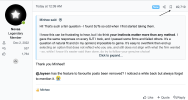
Hi @Minhee, welcome to the community!

I have a question in regards to writing emails as a trainee. What is the best way to summarise things that you would have to do?
Hi! Thank you so much :)

I am not a trainee yet - I am just a future trainee! So I'm not qualified to say anything on this, so sorry I can't be of more help. If you're talking about in an AC written exercise context ('you're a first-seat trainee, you received this email from your supervisor, write a reply summarising next steps'), I have jotted some ideas down below, but this is just inspiration + what I would do as a candidate.

Also, just to clarify, when you say 'things that you would have to do' - do you mean you're sending an email to your supervisor with a list of action items that you're going to complete? I am assuming so, but apologies if I have misunderstood! Feel free to correct me if needed!

1. Give context. If you're responding to an email from your supervisor with instructions / attachments, I like to say something along the lines of: Thank you for the instructions. I confirm that I have safely received x documents and will get started on x now [or this afternoon / tomorrow, whenever it is]. If you just finished a call with someone and want to summarise what happened, I might say: Thank you for calling about x. I'll get started on x now. If I'm just giving a progress update, I might say: I wanted to give you an update on x [deal / matter]. I have finished x and am getting started with x now. You can use your own judgement for this, but I do think it's nice to let the reader know right away what the email is for.

2. Summarising action items. I would use a short numbered list for this, with deadlines / a prediction of when you will be finished with each step, if possible.

3. Flag issues. If there is anything you are not certain of, if you have any questions, if there's something you're struggling with, if you are waiting on information from another team / person, if you foresee a problem / delay coming up in the future, etc. I would also share a list of these.

4. Immediate next steps. Summary of what you are doing next, and if there are any urgent issues / questions.

I hope that is helpful!
 
I feel like this is a silly question but does anyone know whether firms consider the vac scheme when deciding who to accept for open days? If vac scheme applications are rolling, is there any point in accepting someone to an open day only to reject them later for the scheme?
Don't worry, that's not a silly question at all! I am not Grad Rec, so I can't truly say, but I would assume as it is the same people screening for the same firm, they will look for the same traits, so logically, it would make sense to screen open day applicants in the same way as vac scheme applicants.

With that said, I have met many people who were accepted to open days then rejected for vac schemes, or rejected for open days and accepted to vac schemes. This could be because of different stages (e.g. no interviews for open days, more weight placed on written app + testing stages), different levels of competition, improvement between open day app and vac scheme app - it's impossible to know!

Open days are great for learning about firms, meeting people, perhaps getting some application tips, demonstrating your motivation and genuine interest in being there, etc. But they don't guaranty anything - at best, you will be fast-tracked for a vac scheme. This also means, even if you haven't been successful with open day apps, you don't have to worry - they don't pre-determine anything!

Hope that is helpful and good luck :)
 
Slaughter and May direct tc PFO, im feeling really defeated about not getting anything this cycle but still need to hear from Sidley, A&O Sherman, Reed Smith (no assessment yet), and Dechert (no assessment yet). I plan on applying to more firms, but I'm worried I am approaching applications wrong tho I have looked at what recruitment and TCLA forums recommend in your responses.
Hi! I'm sorry to hear that - I think we all go through a moment in the app cycle where we start feeling dejected / stressed, so you're definitely not alone. Take the time to recharge! Well done for getting the apps in - even if it didn't work out, it's just more practice, and it's still such early days. A lot of my good news emails came later in the year! Those are also all very competitive firms, and it truly is a matter of matching with one that suits you. You only need one offer.

If it's not too personal, do you see any trends / have an idea of what particular stage you're struggling with? Do you think it's written apps, CVs, work experience sections, any concerns with grades, tests, VIs, etc.? You don't have to answer here, but I always found it helpful to take a step back and think about which part was letting me down so I could work on it. I know this is difficult, as they don't tend to give feedback at early stages. But if you have any Qs, do reach out :) and best of luck with your other apps!
 
Hi!

I did the interview and got invited to the AC - do you have any tips?
Congratulations!! That's wonderful news, I'm so happy for you!

I'm not sure whether their AC stays exactly the same year to year, so if you have any specific questions about the process, I would recommend contacting Grad Rec directly, as they'll be able to give you the most accurate information.

In terms of general advice from my own experience of ACs:

For group exercises where you have 'prep time' to work on a task:


I would definitely recommend bringing your phone so you can keep track of how much time has passed! You might want to also be conscious of how you are delegating time: e.g. take some time to read over instructions, talk together as a group, recap, etc.

If you are being assessed by someone - don't be intimidated! My assessors were very supportive and helpful! When one groupmate accidentally spoke over another, they stepped in to make sure everyone was on the same page. They also gave 1-2 suggestions, just to keep us on the right track. For the most part though, they let you do your work (though they do listen to you actively).

I had a few moments during group exes where I felt awkward, worried I wasn't saying enough, didn't fully understand what another candidate meant, and that is okay! Because it's an assessment, it's natural to feel a little weird. Your assessors understand that you're nervous and don't expect everything you say to be polished and perfect. Just listen to your teammates, don't be afraid to ask for clarification, and be kind to others and yourself! You want to participate and contribute ideas, but you don't need to be aggressive or loud or overly formal.

For public speaking exercises:

Try to speak clearly and slowly.
I know it can feel nerve-wracking talking in front of others, but everyone feels stressed - it is normal! If this is something you struggle with, you can practice by summarising random news stories or Googling debate prompts and arguing in favour / against the proposition on the spot, without using external research / a script, timing yourself for 3 mins. You can record / video to see if there is anything you should work on.

Be kind. If you are in a debate / discussion setting, there is no reason to get aggressive and start attacking another candidate. You are all in the same boat!

Structure. I like to signpost when I'm talking, so the listeners know where I'm going, and so I can ensure I am staying on track with time + content. So, if I'm doing a presentation, I might say: My name is x and I am the [role]. My team will be presenting on [summary of main point]. We have divided our presentation into the following points: firstly... secondly... thirdly. Y [team member name] will be our [role] and will be explaining our first point. Z [team member name] will be our [role] and will be explaining our second point... I will now hand over to Y to x.

If you are in a debate / discussion setting, and you want to rebut / you disagree with another candidate, be professional. You're not attacking the person - you are attacking their points. Everyone is feeling nervous and it might be someone's first AC or first time public speaking, so even if you don't agree with their argument, be patient and understanding. The force of your rebuttal lies in your logic, not in being imposing or putting anyone down. In debates, I like to start with: Thank you, X, for your points. To summarise what I understood from your argument, ... [summary of their side]. While I agree that / While this may be true in x situation, I argue that / This does not apply to / We should consider...

Content. Definitely keep up with current affairs! It can be helpful as background knowledge, and to bring in topical and relevant news stories. I would recommend the FT Daily News Briefing and FT articles.

For case study interviews:
Be prepared for anything (litigation, M&A, financing, etc.)
Stay calm. It's okay to get things wrong.
I got a lot of things wrong at ACs. My interviewers were usually very patient and helped guide me to the right place. The main thing is to acknowledge when you are mistaken, take a breath / sip of water if you need to, and try again from a different perspective / with your interviewer's advice. It's okay to say if you're not sure / ask clarifying questions, or if you need a minute to consult the background materials again (just say so).
In terms of technicals, I would recommend the materials I listed in my intro post: https://www.thecorporatelawacademy....s-discussion-thread-2026-27.10658/post-262902

I hope that is helpful, and best of luck on your AC!
 
If Jones Day is rolling, is it unlikely that I will progress to the next stage if I apply today?
Hi! I am not Grad Rec, so I can't truly say, but I think it is definitely worth a go if you're thinking of applying!

I applied for the Winter Vac around mid Oct ish last year, and received an interview invite within a few weeks (if my memory serves me correctly). I did that interview around mid Nov. Winter Vac AC spots were all full at that point, so I was then delayed to the Spring AC in Jan. I received the Spring VS offer, but ended up pushing it further back to Summer due to dates clashing with a university mock.

My friend applied for the Spring VS around Jan and still did all the stages and received a VS offer, though for Summer.

This can differ from year to year, but I think this all goes to show you would very likely have a shot, though maybe (depending on numbers) Winter might not be available.
 
  • Like
Reactions: lawtrainee
Does anyone have actionable advice on how to consistently pass SJTs?

I’m fine with Watson Glaser's because they can be learned, but the behavioural sections are where I struggle. I got a pfo from Freshfields today telling me to check my skills report, even though my top skills seem to align with what they’re looking for in trainees.

From my experience the process feels like random filtering. I passed one last cycle by spam clicking through it, but every time I answer following common advice (answer in line with firm values + what is expected of a trainee) I seem to fail.

I find this frustrating because it feels like borderline random filtering, where you’re expected to meet a hidden arbitrary threshold to pass. If anyone has any tips on how to systematically improve and pass this section, I’d really appreciate it.
Hi! I completely understand the frustration. I answered all my SJTs in the same way. Sometimes, I passed, and sometimes, I failed. It can feel very arbitrary and difficult to tell why.

Unfortunately, I don't have any new or special advice, but I did do a detailed comment on how I work through SJT questions when I'm stuck. Apologies I can't be of more use!

 
TCLAWorkspace
TCLA Workspace
Prepare for each firm, in one place.Firm research, practice tests and application tracking.
Explore Workspace →
Hello,
Really lost on how to structure a CV for something like a vacation scheme (this is for Cleary's winter VS). I know what a 'normal' CV with bullet points and headings looks like, but more unsure on if I need to include secondary/A-level grades, how many pages it should be, if I should be listing awards from age 16-18 when I've already graduated university, etc.

Thanks!
Hi! I don't know much about Cleary specifically, but will try my best to speak to vac scheme CVs generally. Sorry I can't be more specific!

Secondary / A-Levels: Yes, I would include both GCSEs and A-Levels or equivalents. I know this can feel like a long time ago, but a significant enough number of firms do have minimum GCSE and A-Level requirements and do still look at this information when screening candidates.

Pages: I would aim for 1 if you can, but 2 is usually okay too (my CV was 2 pages, as I didn't want to remove anything).

Awards from 16 - 18: If you have already graduated uni, I would focus more on recent work experience and university achievements. If you have 1-3 entries from aged 16 - 18 because they were particularly impressive / meaningful / unique, or because they connect to something you did at university / later on, I think that is fine! I would be cautious about anything beyond that though - you don't want to give the impression that you lack recent experience / achievements.

You probably know a lot of this already, but just in case it is helpful:

1. Sections


You MUST have:

- Full Name at the top
- Then your contact details (MUST have email, can also include phone number and LinkedIn if you would like, I have seen some people add their home address too)
- Education(1 entry for GCSEs or equivalents, 1 entry for A-Levels or equivalents, 1 entry for university degree, can add anything following like masters, sqe, etc.)
- Experience (I did 2 sections for this - 1 for Legal Experience and 1 for Non-Legal Experience, but you don’t need to do this)

CAN add:

- Extracurriculars (I think this is important to show you are a rounded candidate, particularly if you are still in school)
- Other Professional Courses / Training / Certifications (definitely can add if this is relevant to the role or to yourself)
- Volunteering (some people like to keep this separate, though I always classified my volunteering either under Extracurriculars or under Work Experience depending on the seriousness and level of commitment of the role)
- Languages (if you would like, though for comm law in London, I don’t think this is too necessary - if you are applying for opportunities in other countries or a role where being able to translate etc. might be a plus, you should add this)
- References (again, I don’t think this is necessary for comm law in London, as firms rarely ask for references, and when they do, they tend to have their own internal forms which they will ask you to fill out)

STRUCTURE:

- Use section headings and entry headings to separate experiences. Most recent experiences at the top, ordered by end date.
- Write in bullet points and short sentences. Try to be as concise as possible. You can use AI if you’re struggling (’reword in short phrases to be as concise as possible, for my cv for a vac scheme application to x firm’).
- Use a readable font (I like 11 pt Arial or Times New Roman). Avoid bright colours.
- Make sure all your margins, spacing, etc. are consistent. Some employers use AI to screen for errors and will deduct points if they see sloppy formatting - this is the easiest way to show competencies like attention to detail! Even firms that don't use AI will have Grad Rec to check. You can use a data secure AI to ensure your CV doesn’t have any slip ups, as it’s easy to make mistakes.

CONTENT:

- No SPaG errors for the same reason as above. Again, you can use AI to proofread this.
- Be consistent with spelling (either British or American, I would opt for British if it’s a British role) and punctuation (either always use the Oxford comma or never use it, etc.).
- Emphasise what you did! Use action words (‘created’, ‘grew’, ‘delivered’, etc.)
- Include outcomes! What did you contribute / achieve?
- Be specific. Quantify! How many? How many times a week? How many people? Where? Etc.
- Personal preference - I like to use numerals since they are easier to skim-read, and full stops, but some people write without full stops.
- Try to include a range of entries (legal, non-legal, retail, volunteering, extracurriculars, etc.) Try to also demonstrate a range of competencies (written communicatoin, attention to detail, problem-solving, collaboration, etc.)
- If you have a gap, that is okay, but just be prepared to discuss it at interview.

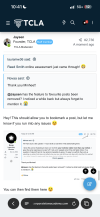
Jaysen kindly shared his old CV, which you can refer to as well!
I attach my old one in template form, and a PDF so you can see how it looks in practice. Feel free to adapt - there's some flexibility with CV design provided it looks professional and is clear to read.

As @Jessica Booker pointed out, just make sure the dashes between the dates are consistent!
 
How to answer ‘why do you want to become a solicitor’? I like the processes behind things you see in the everyday world and solving complex issues to minimise them to simple solutions but I don’t think that’s enough. Do I have to link back to the firm? Link back to my work experience? Thanks!
 
How to answer ‘why do you want to become a solicitor’? I like the processes behind things you see in the everyday world and solving complex issues to minimise them to simple solutions but I don’t think that’s enough. Do I have to link back to the firm? Link back to my work experience? Thanks
That's a good starting point!! I'd link it to specific experiences, and pick them carefully, because the first thing an assessor might ask is "So why not consultancy?"

I got caught out by this myself... I mentioned mentoring and advocating for people, and was immediately asked "Why not human rights?”

Cardi B Aha GIF by Taimi


So I now use my non law work experience to close down those follow-ups. I draw on my project management background, then explain what made me realise I wanted to move “back” into law specifically. The key is showing what being a solicitor gives you that those other paths don't, like advising clients on legal problems or working with the law itself.

I'd also save firm-specific reasons for "why this firm".
 
How to answer ‘why do you want to become a solicitor’? I like the processes behind things you see in the everyday world and solving complex issues to minimise them to simple solutions but I don’t think that’s enough. Do I have to link back to the firm? Link back to my work experience? Thanks!
The way I approach this question is: if my answer could explain why I want to go into any other profession, it’s not explicit enough. For example, solving complex issues could apply to many careers. Funeral directors also solve complex issues (sorry to be crude, but hopefully you get the point!). You need to understand what solicitors actually do specifically and link your motivations to that. There are things that solicitors do that aren’t done by any other profession. You also want to draw upon experiences that made you realise that you’re drawn to being a solicitor specifically. Sorry if this response is a bit garbled, but I hope that helps a bit.
 
I would love to have some insight on this as well - the firm’s application deadline is 7 January and the open day is on 2 December, but they review vacation scheme applications on a rolling basis. Should I wait until after attending the open day to apply, or submit early?
 
  • Like
Reactions: Tap-204863
TCLAWorkspace
TCLA Workspace
Prepare for each firm, in one place.Firm research, practice tests and application tracking.
Explore Workspace →

Find member