Work Experience in Paris vs. LLM at the LSE

Hello! I have completed a double degree in English (LLB) and French Law (undergraduate and Master 1) at the Universities of Leicester and Strasbourg respectively. I am now doing a Master 2 at the University of Paris I Panthéon-Sorbonne. I have an internship lined up with an English headquartered international law firm in Paris for July-December 2023 and an LLM at the LSE. Thus, I now have to choose. Ultimately, I wish to obtain a training contract in London at an international law firm. Which would you advise is the better option? They both have pros and cons and I have heard that law firms do not place too much importance on work experience abroad as much as just a degree from a reputable university in the UK.

Work experience in Paris vs. LLM at the LSE

Hello! I have completed a double degree in English (LLB) and French Law (undergraduate and Master 1) at the Universities of Leicester and Strasbourg respectively. I am now doing a Master 2 at the University of Paris I Panthéon-Sorbonne. I have an internship lined up with an English headquartered international law firm in Paris for July-December 2023 and an LLM at the LSE. Thus, I now have to choose. Ultimately, I wish to obtain a training contract in London at an international law firm. Which would you advise is the better option? They both have pros and cons and I have heard that law firms do not place too much importance on work experience abroad as much as just a degree from a reputable university in the UK.

SQE 2

Hi all,

i was wondering if anyone has done SQE 2 and how was the whole process?
1. are there ways to can strategise studying for example what are the are most common documents that can come up for the legal drafting exam?
2. Any tips for how to revise functional knowledge for someone who done the LPC two years ago?
3. tips for advocacy - anyway we can narrow down the most likely topics? Or tips in general to succeed.
Thank you in advance :)

Finding a legal role

Hi,
I am currently looking for legal roles to gain some experience. I am a recent LLB Law Graduate and I have no paralegalling experience. Can anyone give me any tips on how to find a role especially for someone who has no experience.
Also does anyone know any agencies, legal recruiters or any websites (e.g indeed) that would help me find a role.

Intray/E-tray Exercise Tips

I thought I'd collate some tips I found helped me with intray/e-tray exercises (if you have any other, feel free to list them below):

1) Read all the documents carefully - sometimes there are many documents to review, so take time to read each slowly and carefully.

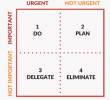
2) Organise and prioritise: some tasks will be more urgent and important than others
💡Top Tip: The Eisenhower Matrix is a handy tool to use here and can help you group tasks based on urgency as well as identify which tasks can be delegated or left undone. You can create your own like this:


1674937673785.png1674937673785.png

[💡Tip: Try to complete tasks in order of importance, focusing on work from partners and senior associates (especially supervisors) and relating to clients].

3) Remember the details: Avoid spelling mistakes, remember formatting and structure and correct email/letter greetings and salutations.

4) Remember the firm's practice areas/expertise: when collating information from multiple documents, remembering the firm's practice areas and expertise can help you find what points are important to note, identify areas of concern, and pose any questions where there is inadequate info or clarification needed.

5) Practice: there are lots of free resources to practice with online (I've listed a few below)

Overall: Take deep breaths, and pace yourself- Time does seem to speed by, but if you remain calm, you'll be fine. Also, remember, the aim isn't really to complete every task but to do the important ones well.


Useful websites:

Unusual Mitigating Circumstances

Hi, throwaway account because my other account may be personally identifiable.

I have had nothing but PFOs for 2 years running, and not so much as an AC. I have a question about mitigating circumstances and how to present them. I'm afraid it's a bit of a rollercoaster.

I had an interesting relationship with my parents. My parents both have a low-key history of mental illness, with my dad having been sectioned at a young age and my mum having a fairly obvious case of narcissistic personality disorder. They are both hardcore, irrationally religious, claiming to hear the voice of god and consult him on a daily basis. Despite this, they are both relatively functional in public because their narcissistic behaviour is channelled into appearing to be community do-gooders. My mum founded a charity and my dad is a vicar.

Behind closed doors, however, they are abusive and controlling. Because they hear the voice of god and he guides their decisions, they find iron justification in anything they decide to do. They compartmentalise everything, professing their love for me verbally but consistently making decisions which harmed me. I like to consider myself a surprisingly normal person despite my background. Unfortunately, my religious decisions escalated their controlling and irrational behaviour. I could talk all day about how this manifested itself, but I'll try and keep to the basics.

When I left for uni, in response to a lack of control, they started to assert control over my finances, taking my maintenance loan payments and refusing to guarantor me for housing. This made my time at uni hell - I was determined to get my degree and worked long overnight hours as a bartender. This itself would have affected my grades, but I was also caught up in a constant game of cat and mouse with hiding my finances from them, arguing constantly for my independence, and putting up with them constantly disrupting me in other ways like making unsolicited calls to the faculty when I tried to avoid contact with them. Years later, I realised that short of formal estrangement the best solution would have been publicly posting about what was happening - the threat of reputational damage would have been the only way I could have resolved it. I didn't consider formal estrangement an option as I couldn't conceive of being able to support myself at the time, and I was permanently maxed out of several overdrafts so had no money for deposits.

Overall, this experience was exhausting, and so unstable that I struggled to achieve my best. It is immensely frustrating - I knew I could have achieved a first had my parents been supportive and were I financially stable. Honestly I cannot imagine anything disrupting my studies more besides a serious illness.

To make matters even worse, when COVID hit I lost my source of income and had to interrupt the year, so my degree took 4 years rather than 3.

My GCSEs are all good, 5A*s + 5As. My A-levels are A*,A,B. At the end of my non-law degree, I had the following grades:

First year:
51, 44, 49, 51, 55, 55

Second year:
66, 56, 59, 62, 60

Third year:
75, 65, 60, 61


After my undergrad, I studied the MA Law with the University of Law and scored a high commendation (68%) with firsts in Contract Law and my commercial law research project.

Obviously, I recognise the position this puts me in. My grades are poor and inconsistent enough to seriously hinder my chances at lots of firms. Technically, I scored a 64% 2:1.

The university faculty was somewhat aware of this, and I have a reference from the head of my programme who I went to for support just before I had to interrupt my studies. I was an anxious mess.

My question is this: these circumstances are extremely difficult to explain concisely. When I do explain them, I believe they lie outside of most people’s scope of reference and instead it just comes across poorly. So how can I approach discussing them?

I apologise for the length - I really feel it's necessary to actually understand it. I would really appreciate a bit of advice, and especially the expertise of @Jessica Booker

Best revision guide for 2022/23 PGDL at University of Law?

Hi, I am currently studying full time PGDL at Ulaw (online) and really looking for a good set of study notes which will take me through the structure of exam questions. I am working full-time and studying full-time, so it is definitely a challenge. I have already ordered PGDL Answered Ulaw edition and planning to purchase PGDL Stuvia ones as well. Would really appreciate study tips and advice from former PGDL students!
  • Like
Reactions: AdW

PGDL Ulaw online exam- accessing digital notes

Hi, I am currently studying PGDL (full-time, online) at the ULaw and I apologize for the question if it is too obvious and has been answered before. Are the PGDL online exams proctored?

Just to confirm, can we use our hard copy materials (printing out our own notes) during the online open book exam? If yes, does it also apply to digital notes?

I read somewhere that during the exam our computer screen would be locked so we would be unable to use digital notes, but there would be no restriction on hardcopy materials.

I use Microsoft Word exclusively to take notes. In this case, will I be allowed to refer to my digital notes during the exam?

And last question, what about SBAQs? Thank you in advance.

Intray exercise - simmons

Hi all, I have an AC with Simmons coming up where I will be required to complete an intray exercise. I am quite nervous about it cause I have never done one before. I was wondering if anyone has any tips on how to prepare for it? I understand that the main thing would be to prioritise tasks properly and explain why. But in terms of urgent tasks vs important tasks, am I right in assuming that I should prioritise urgent but perhaps not so important tasks over important ones, try to finish them quickly and then dedicate my time to the important ones? Also I read somewhere that there might be a research task coming in halfway, I am a bit confused because I don't know whether I would be required to actually do this task and draft something?

Overanalysing an AC or VI?

I thought to leave some advice which I found helped me stop overanalysing or stressing over a completed VI or Assessment centre:

1) Allow yourself to feel disappointed after a bad experience: It’s okay to feel negative feelings when you feel things didn't go to plan. This is much better than simply brushing off or repressing negative feelings. So rather than leaning into toxic positivity or numbness, take time to reflect on the experience.

2) Talk about it: It's important to release it from your mind, so maybe talk to a family member or friend about the experience. This will help you gain further perspective on the situation. Journalling can also help here.

3) Reframe your mindset to acknowledge your efforts: any form of progression is still an achievement in a tc or vacation scheme application process. Every time you complete a stage in an application process, you have made significant progress and should feel proud. It is not easy to complete any stage of the application process, so celebrating yourself and acknowledging your efforts at every stage is important.

4) Reflect on the experience to see areas where you did well and where you need to improve: take time to reflect on what you did well and any areas you feel you can improve on. This will help refocus your mind and help you prepare for the future.

5) Do something fun: finally, to take your mind off the whole experience, try distracting yourself by doing something you enjoy. This could be a walk, baking or hanging out with friends. Doing something completely different (even just for 30 mins) can really help reenergize and motivate you.

If anyone else has more tips, leave them below :)
  • Like
Reactions: kab and divaination

Fieldfisher AC

Hi all

I've been invited to the Assessment Centre stage for Fieldfisher. The criteria for the assessment is:

An individual case study exercise (I suspect the case study will require either a PESTLE/SWOT analysis, which I have done before with Stephenson Harwood)
A team-based exercise and; (I have never done a team-based exercise before and I am unsure how to approach this)
An interview with one of our fee-earners (I am unsure if this is the Partner interview for the last stage, or if the Partner Interview is separate from this. I will treat it as though this is the Partner interview, as this is what they did at Stephenson Harwood)

Does anyone have any experience with the case study exercises used by Fieldfisher? I would imagine it would be a scenario, applying SWOT and advising a client, or applying PESTLE and advising a client.

Furthermore, any guidance on the team-based exercise is much appreciated! Thank you so much :)
  • Like
Reactions: FHKCL

How to prepare for Training Contract?

I have an incredibly short turnaround between receiving my offer (Friday 20th Jan) and starting my TC (Monday 13th Feb). I'm freaking out a little! I've requested entry into the junior lawyers thing so just waiting on that being accepted but in the mean time if anyone could please give me any advice as I want to be as prepared as possible. What do I need to know/ where can i find it? Any nuggets or imparts of wisdom would be SO appreciated.

Thank you!

My journey to a TC-Non UK law degree

Hey everyone. I know I’m very late to this party. But having read the stories of so many aspiring lawyers has inspired me to write about my journey so far and take accountability for my mistakes.

Here’s my journey so far:
1) applied to and got rejected from the spring vacation schemes at Sidley Austin & Weil; (application stage)
2) awaiting the outcomes of my applications to Kirkland and Shearman for their spring/summer vac schemes

As for developing my commercial awareness, I regularly listen to the FT news briefing podcast and also read TCLA’s weekly commercial awareness newsletters. I find these sources really interesting and easy to digest. Whilst I’m able to link commercial topics to wider trends (such as economic, social & political), I’m struggling to link them back to law firms, possibly why I faced application stage rejections.

Moving forward, I am in the process of applying to the Ropes & Gray vac scheme determined to not repeat the previous mistakes. After this, I’ll be applying to direct TC applications as I feel I have a considerable amount of legal experience through previous internships and my current job as a paralegal to demonstrate my interest in commercial law. I hope to learn from members on this forum. Thanks 😊

How to demonstrate commitment to law as non-law

Hi,

This question has probably been asked before, but I couldn't find anything when using the search tool. I have a direct TC interview soon and I want to be prepared to answer why law. I have many good points for why commercial law since I am studying a business degree (such as client-facing, international, versatile), but I feel I should be able to convey why the law specifically (for example if questioned on why not consultant/IB)

The only motivation I can think of is that the law provides a solid framework. At times during my degree, I would find certain business modules general and almost a bit waffly, and I believe the law provides a rigid framework to work with whilst also being able to consider the wider economic environment.

I feel as a law student it is easier to demonstrate commitment to black letter law itself as you have studied ins and outs, but as non-law i'm not sure how to sound more convincing.

Would appreciate any advice!

Being a commercial lawyer and interest (riba)

Whilst I would like to pursue my goal to become a commercial lawyer, I am keen to avoid any dealing with interest (riba), as this is prohibited in my religion. I am aware this perhaps considerably limits my potential area of specialism, but I'm thinking perhaps areas such as employment, supply chain or public policy would be suitable? Any comments?