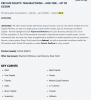
White & Case online form

There is a section for work experience and also career events which asks you to "provide details of any careers events you have attended e.g. insight days, workshops, presentations etc."

Would I be right to assume the work experience section is for paid work experience only and the career events is for legal work experience such vacation schemes? There is a 350 word limit for the Career events section so I'm not sure.

Also would you have to write in prose or could you bullet point. This goes for the Extra-Curricular Activities section as well, which asks for "details of any interests and extra-curricular activities, including any positions of responsibility or achievements".

Least time consuming initial applications?

There are some applications like Pinsent Masons that want you to write 4000 characters for each of their four questions. I've seen some others, like DLA Piper, that ask just one 250 word question. Obviously, I know the later stages will be just as time consuming and this shouldn't be a big factor in choosing a firm but I am interested which other firms you have found to have shorter applications?

Clifford Chance system glitch

Hi, I think I might have broken the CC website :DD

I've started two applications, one for a TC in London which is not yet submitted and one for an intern in Luxembourg (as it doesn't say that applications to different locations are prohibited.) However, now it looks like I've submitted both applications and the cover letter from the intern application transferred onto my TC app. To make it more interesting, the London TC app appears on the portal both as "submitted" and I can view the submission ,and "open to submission" and I can submit the app again. I have no idea what is going on. Has this happened to anyone else?

Personal Referee?

Hello! Within the Sidley Austin VS application, the referee section requires 1 academic referee and provides the option of providing another, either personal or professional referee. My question is, is the application stronger if you provide a second referee? Logic says yes. If that is so, what does personal referee mean? What are some examples? Is a university academic mentor an example or something much more personal is needed?

Travers Smith VS application

Hi -

I heard somewhere that there is a different preference to non-law and law students for travers smith's winter and summer vacation scheme - but i can't remember which way round it is (e.g. non-law preferred for winter) - does anyone know? I initially thought it was summer for non-law, but recently heard someone say winter for non-law.Thanks in advance.

Taylor Wessing Open Day Application

Hi All,

Currently attempting to answer the Taylor Wessing open day application which is:

At Taylor Wessing, we're a law firm for the game changers, the smart thinkers, the ground breakers and the trailblazers. What do you want to achieve and learn by attending this event?

I'm having an internal debate whether to address this as a cover letter (write a paragraph or two about the firm, culture, work e.t.c. to demonstrate my knowledge of the firm) and then address what i want out of the day, or just jump straight into the latter. There's no word limit. Any thoughts?

Many thanks!

Mishcon de Reya issue question

Hi guys,

The Mishcon app this year asks this question: "If we were to invite you to interview what is the issue that you would most like to talk about? And why? This should be an issue that you would happily discuss with your friends and should be something you genuinely feel passionate about. No 'Brexit' related issues please! (150 words max)"

Having recently spoken to their graduate recruiters about this, I know that this is not really supposed to be an opportunity to talk about something like a hobby or sport. Unless of course, there is an issue behind it.

But because of the "passion" angle it is hard to know what they are really gunning for here. My current thoughts are to talk about a volunteering experience I am involved with. Something else I have been thinking about is writing about my dissertation topic because it raises some difficult issues.

What do you think? What would you do?

BCLP Training Contract Interview 2019

First Round:

The drafting exercise was about investing in [redacted] (was it a good investment, what was its position in relation to competitors and how it could improve/work on its competitive advantages?). It was definitely time pressured (1 hr and around 8 pages), but was really doable and the actual content was easy to understand, especially in comparison to some other written exercises that I have done. Also, we got to type, which was new and really useful.

The role play was the part where I think I did best (but I don’t know for sure). Essentially a partner asks you to present your findings from the written exercise and then plays devil’s advocate on whatever you say. Some of the other candidates had really hard questions; mine were pretty straight forward, but she did try to challenge everything I said. Keeping a cool head and taking a minute to think is definitely required here. It is only 10-15 minutes, so it flies by.

The negotiation was pretty standard. We concluded in about 20 minutes, which was really good. There was an element of maths, but the rest was really simple, surrounding issue between a [redacted]. However, my negotiating partner did dominate throughout and didn’t always give me the chance to say much, which I was annoyed about. But I think that may have been noticed and I did just try and speak as much as possible, even if that was reiterating points she said in a different way. I think this was my weakest part, but again I can’t know for sure.

Finally, my interviewer was lovely and just asked classic questions (why BCLP, why commercial law) – quite a few scenario based Q’s on legal excellence and managing relationships (like what do you do if a senior partner is treating you badly)?

By Anonymous

Reed Smith question help

Hey guys,

As part of the first stage of the application, I'm asked to answer: "Please give details of any prizes, awards or stipends etc. you have won or been granted, numbering them 1 to 5 (you need not include your degree here)."

I only have 2 prizes/awards in the traditional sense of the word - could its definition be stretched? I've been 'awarded' a certificate for completing a diploma in a musical instrument, and achieved a place on two competitive mentoring schemes. Would this count?

Any insight or guidance regarding this question would be tip top.

Thank you,

Kushal

Travers Smith Cover Letter

Hi All,

I'm currently typing up my cover letter for Travers Smith's Winter Vac Scheme and it notes:

IMPORTANT: Do not sign the cover letter with your name.

Am I to take this to mean that adding my details (name and address) in the top right and signing off "yours sincerely" then my name are not needed? (Would make sense given how I've already provided that info in the initial details section!)

Faegre Baker Daniels Interview 2019

First round interview
Fairly relaxed, lots of opportunities to break some jokes. About half of the questions were CV-based, so make sure to review your application before the interview. Most of the questions were very specific to what I wrote, e.g. I put in my application that I was training martial arts and got into a long discussion about the details of my experience in this area - so don't lie in your application, they will test you! :)
I was interviewed by a partner and an associate. The interview lasted for a little over an hour. I received an invitation to the second round on the same day.

Examples of questions:
- Why did you decide to apply to us?
- Why did you decide on a career at law?
- Why did you choose your university?
- What are the disadvantages of working for the US law firm?
- What are the key attributes of a successful solicitor?
- How would you react if you saw your colleague being visibly distressed at work?
- Tell me about your biggest achievement.
- Tell me about a time when you contributed to the success of a team.
- What do you like to do if you had a rough day?
- If you could be a biscuit, which one would you be and why? (best.question.ever)
- If you were to have a dinner with any three people, who would you choose and why? (may that be historical figures, movie characters, family members, etc.)
- Present three arguments for no-deal Brexit and three against.

Second round interview
The first part was an interview with two senior partners. It was much shorter than the first one and also more "to the point". Questions revolved around motivation for career in law and other aspects of application so I cannot really sample the latter as they would be specific to the candidate.

Examples of questions:
- Why did you decide to study law?
- Why did you choose your university?
- What is your proudest achievement?
- Tell us about your time with us during your vacation scheme.

The second part was a case study in which I had to draft an email to a client. All necessary material was given and the scenario was rather straightforward. There were also three other additional "what if" questions for which only a very basic understanding of commercial law and some common sense were needed. I was given 1 hour to complete the task.
The firm came back with their decision a week later.

Huge thanks to @Dominika_95 for taking the time to share this.
  • Like
Reactions: ayiiii05

Commercial Awareness Update - October 2019

Hello everyone,

It is the start of a new month and we have some new commercial stories to share with you.

We really hope you enjoy these and that you find them useful. Your feedback is always welcome and very much valued, so please do let us know your thoughts :) We have a growing presence on social media with a new instagram account so remember to head over there for more updates from the team too!

Hope you are all having a great start to October, all the very best with your applications, and happy reading!!

Topics Covered:

1. Novartis Pairs Up with Microsoft for AI Drug Development @Alice G
2. Back to Basics: Cybersecurity for Law Firms @Jaysen
3. India’s Corporate Tax Cut @Sara Moon


*************************************************************************************************************************
Novartis Pairs Up with Microsoft for AI Drug Development @Alice G

The Story:

Novartis and Microsoft have announced that they have joined forces under a five-year agreement with the hope of using artificial intelligence to alleviate some of the greatest problems in the pharmaceutical industry. Novartis hopes to have AI systems enhancing all aspects of its business from financing to development and from manufacturing to sales. On average, it takes around 14 years from the discovery and development of a new drug to its commercialisation and the cost is in the region of $2.5bn; it is hoped that these stats can be reduced with AI systems in place. Novartis anticipates that by using deep learning technology (machine-learning which can process unstructured data while using artificial neural networks) it will be able to develop drugs more quickly and more precisely, and also deepen its capabilities in personalised medicine.

Impact on Businesses and Law Firms:
The healthcare industry has been rather on the backfoot in terms of technological development, but this news demonstrates that Big Pharma is coming to realise that technology is probably the best way to reduce the arduous research and development process. The quicker development of drugs would be of huge benefit to us all and we might see breakthroughs in treatments for illnesses and diseases we do not currently have cures for. This alliance might signify the development of a new trend since other pharma companies might be more incentivised to harness technology and follow the example set by such a renowned business like Novartis.

Lawyers would have been involved in the negotiations and the agreement of terms for this alliance. With the view to developing personalised medicine there is also a reasonable concern for the personal data of those patients involved. Lawyers would also be relied on to advise the companies about cybersecurity and data compliance laws in the jurisdictions concerned.

Back to Basics: Cybersecurity for Law Firms @Jaysen

The Story:

Law firms are attractive targets for hackers. They may have access to a company’s most valuable information, such as trade secrets, intellectual property and sensitive client information. They also serve as an intermediary when large sums of money are being transferred between parties.

Growing use of technology means the consequences of cyber attacks become more damaging. Information can be accessed from anywhere in the world and hackers are harder to track. The importance of adequate cyber security measures is only going to increase.

Impact on Businesses and Law Firms:

Law firms can try to put systems in place to minimise the risk of a cyber attack, however, sometimes education is the best preventative measure. For example, phishing attacks, which are the most common cyber attack facing the legal profession, involve hackers impersonating people, such as lawyers or clients, in order to access money or sensitive information.

However, no matter what law firms do, they can’t completely escape the risk of a cyber attack. That’s why what matters is how law firms respond if a breach does happen. That means putting processes in place so they can respond to a breach quickly, for example, hiring forensic investigators, informing affected clients, checking insurance coverage, drafting regulatory notifications and identifying legal obligations. The GDPR, for example, means law firms now have to report a breach within 72 hours or they could face serious fines.

Not all law firms will face a breach, but if they do, it could be one of the greatest threats a law firm can face. The integrity of their service rests on their ability to handle sensitive disputes and confidential deals. Lose that, and the reputational costs could be significant.

India’s Corporate Tax Cut @Sara Moon


The Story:

On 20th September, India made a historic reform to its economy by cutting its corporate tax rate from 30% to 22%. For some of the new manufacturing firms, the rate will be lowered from 25% to 15%. This is in response to the economic slowdown the country is currently facing. In the first quarter of this year, India’s GDP growth fell to 5.8%, which was a five-year low, and in the second quarter, it fell to 5%, which was a six-year low.

Impact on Businesses and Law Firms:

Corporate tax cuts come with several positive implications. Domestically, they allow existing companies to gain more profit, which can be used to reinvest and expand the business. This may also boost employment, which can then increase domestic consumption and further benefit businesses. More importantly, from a more international perspective, India’s corporate tax cut is likely to attract foreign manufacturers who are currently based in China but are seeking alternative locations that can help them avoid high tariffs caused by the ongoing US-China trade war. With Google already having shifted its Pixel smartphone production to Vietnam from China and with many other companies planning to follow the trend, India can take huge advantage of this with its lower corporate tax. It is estimated that the Indian economy could benefit by $11 billion from these relocations caused by the trade war.

Relocation projects by companies will require advice from law firms on Indian law. Advice will be especially needed with regards to land law and employment law, which are notorious for their complexities. This is because the land ownership is fragmented across several states and companies have to strictly comply with all of the 40 Acts of Labor laws. India prohibits foreign law firms from practicing domestic law so law firms like Allen & Overy which have close connections with Indian law firms will gain a good source of revenue from this proposed relocation trend.

Work Experience - How far back is it acceptable to go?

Hi everyone,

Just wondering - how far back is it acceptable to go when discussing work experience, extra curricular etc in application questions. I'm a little worried as I've been told 12- 18 months max. I graduated a few years ago and I've been in full time employment for just over a year and volunteer on weekends, so those are the majority of my experiences the past 12 months or so. Any insight appreciated, thanks :D

Training contract journey of an international student

Dear all,
My name is Soliha. I am a final year international student reading law at the University of Law. I am not from the pool of students who always wanted to be a commercial lawyer. I have tried my way to many career paths: tutoring, human rights, charity, business, medicine, etc. In my final year at high school in my country, I was fortunate to join the mooting club to prepare for P.Jessup International Moot. I loved the process: extracting the relevant law from volumes of acts/regulations/cases, working on it and presenting it. This was the key experience for me to decide to be a lawyer.

I am from a developing country. The legal system in my country is quite different. I had no idea that the career routes are divided into Barrister and Solicitor routes in the UK and many other countries. In my first year, I did lots of research, read Chambers, attended events, became a finalist in intercollegiate mooting in London, represented international students at the Students Association. I was very late when I found out that there are many opportunities for first-year students: insight days, open days, organisations that offer networking opportunities, mainly because I had no acquaintance in the legal industry. It took me a while to understand the recruitment process and how the City works (I am still working on this bit). I did an internship at Amnesty International in the summer and understood that human rights/NGO work is not for me.

In my second year, I started my first cycle of applications. I attended more events (Legal Cheek events, insight evenings), participated in the Commercial Awareness Competition (made to Round 3), did some more mooting and talked to barristers. With the insight I got from them, I made sure that I did not want to be a barrister. I received support from Strive Consultants to improve my commercial awareness and my understanding of the city. My mentor helped me a lot to get where I am now. I made six vac scheme applications and failed at the application stage or online assessment stages. (I have confidence issues in my writing and application techniques)

Now here I am. Being offered TCLA scholarship, I feel much more confident than the previous year. I will be posting updates here. Good luck to everyone.

Researching law firms

When researching a firm am I supposed to make notes on everything that is on the website or should I research according to the question being asked and the answers I want give. i.e. research further on a deal to back up a point ?

I am struggling to find information in relation to deals and cases for a particular law firm on their because it is not clearly displayed on their website. Can you advise on other web links I can use that are free ?

Work Experience Sector

I have a question concerning the work experience sector in training contract application forms. When it says details, does that mean what I did while at the job or also the skills and competencies that I have developed from that. When the application is already asking in another section my key competencies the logical conclusion is that details does not include the skills gained. But what if the application does not ask about my competencies anywhere else. Is 'details' under the work experience sector the place to include them?

Legal 500 - 2020 Rankings

Thanks to @Lumree for flagging this up.

Legal 500 recently released their UK 2020 rankings: http://www.legal500.com/assets/pages/united-kingdom/uk.html. Many of you will be familiar with the site, but if you aren't already, they're quite a useful way of researching a firm's practice area strengths.

For example, you can see Jones Day's London office is ranked tier 1 or 2 for the likes of mid market private equity, fraud and real estate funds: https://www.legal500.com/firms/50505-jones-day/9065-london-england.

Note, just because a firm has a lower tier ranking in a practice area, it doesn't necessarily mean that that area is not a strength or core practice area. You can read about their ranking methodology here: https://www.legal500.com/assets/pages/about-us/how-it-works.html.

You can also use it to find notable lawyers, and a firm's key clients and recent deals.

e.g. Simmons & Simmons

upload_2019-9-30_17-0-6.png

http://www.legal500.com/firms/3058-simmons-simmons/476-london

That's very useful; although as always, if this is something you want to mention in your application forms, think about why you are mentioning a client or deal. If you're using it to back up a point you are making and it flows with the rest of the application then that's usually fine. It's not fine if you're mentioning a random deal and it's not clear why it's there.

If you use Legal 500/have any tips to share on using it, feel free to include them below. It has been a while since I've personally used it!

The Hunt for a Training Contract: Take Three

Hey everyone,

I thought maybe this would be a good place to get some initial thoughts down, perhaps ground myself a little as I prepare for what is sure to be quite a whirlwind of a journey.

A little bit about me. I graduated from a Russel Group university in 2015 with a 2:1, and to be quite honest I don't think I was too sure I knew what I was doing. I wanted a career in Law and shot off some poorly-written applications in a desperation to make it look like I knew what I was doing, since everyone else seemed to.. yeah, I know. The reality was that I had zero confidence and my individual grades weren't that great (plenty of 2:2s, couple of 3rds and even did a couple of resits...). I'd held a weekend job throughout uni and done some pro-bono at the legal advice centre but all I had drilled into my head was that my less-than-stellar grades would get me nowhere. That was cycle one down the drain.

I ended up taking a gap year for several reasons but during that time ended up doing a 9-month stint in the DWP. I gained a lot of skills, but felt I wanted to develop a career in Law further and took the leap in doing the LPC without a TC offer. I hadn't made applications because, well... my work experience wasn't fantastic and again it was the notion that my grades would lead me nowhere.

LPC done and dusted in 2017 (with a plethora of resits due to certain circumstances that I've been told probably will not count as mitigating circumstances) and I found myself working at a high street firm for a few months. I had attended a few open days and what is now lawcareers.netLIVE and decided that working at a high street firm most certainly was not for me. I made a few applications during this time, made it to the VI stage at one firm and interview at another, as well as an AC for an in-house TC (the furthest I've ever been!) but no light at the end of the tunnel that is the TC, unfortunately. I also started volunteering at my local library, undertaking projects and sessions for children - I still volunteer there most Saturdays. Unfortunately that was my second cycle without any luck.

All the while I remained on the job hunt, feeling that some paralegal work may boost me. It took me quite a few months, but I ended up as a legal assistant at a conveyancing firm where I've been for the past year.

So... why a TC now? Why am I doing this? Is there a point? Will I be a suitable candidate?

Yes, my grades aren't brilliant despite having the 2:1. My work experience may be classed as average and my extra-curriculars... meh? But I think that's the problem. I never had the confidence to push myself or go further. I had (and sometimes still have) this notion that my grades and experience means that any recruiter will just stop reading at that point and throw my application away. Don't get me wrong, I'm sure it happens and I'm sure these are points for concern for recruiters. But how can I know without even trying?

I can't change my grades and I can't change the experiences I've had, and being in full-time employment can make attending events/gaining other experiences somewhat challenging. But what I can do is try to sell myself better. I mentioned above that I never had the confidence to push myself and now I feel like that really showed in my application. I've gained a lot of skills from various experiences and I've learnt a lot. I've learnt more about what I actually want and what kind of firm I want to work at. This time I want to make the effort to actually talk to people, work on myself and really improve the way I write applications. I want to give myself every opportunity and every edge I can gain in selling myself to recruiters. And if I fail to get a TC this cycle, no worries. Onwards and upwards. I'll learn from my experiences and keep pushing forward.

This is way longer than it should be already, but perhaps this is a way of keeping myself accountable as well. Maybe I'm trying to gain further confidence because I always worry too much of what others are thinking and whether it's really worth it. I want a TC, I really do, but without making a sincere effort I will go nowhere. It's up to me to give it a best shot and maybe this third cycle will be a bit more successful.

If you read this far... thanks, I very much appreciate it. If anyone has any tips in respect of confidence/speaking confidently that will be very much appreciated. I'll try to update going forward. I'm currently researching law firms and trying to prepare some questions to ask at the law fair I will be attending :)